Shopify Development and Performance Marketing: Why the Two Must Work as One System
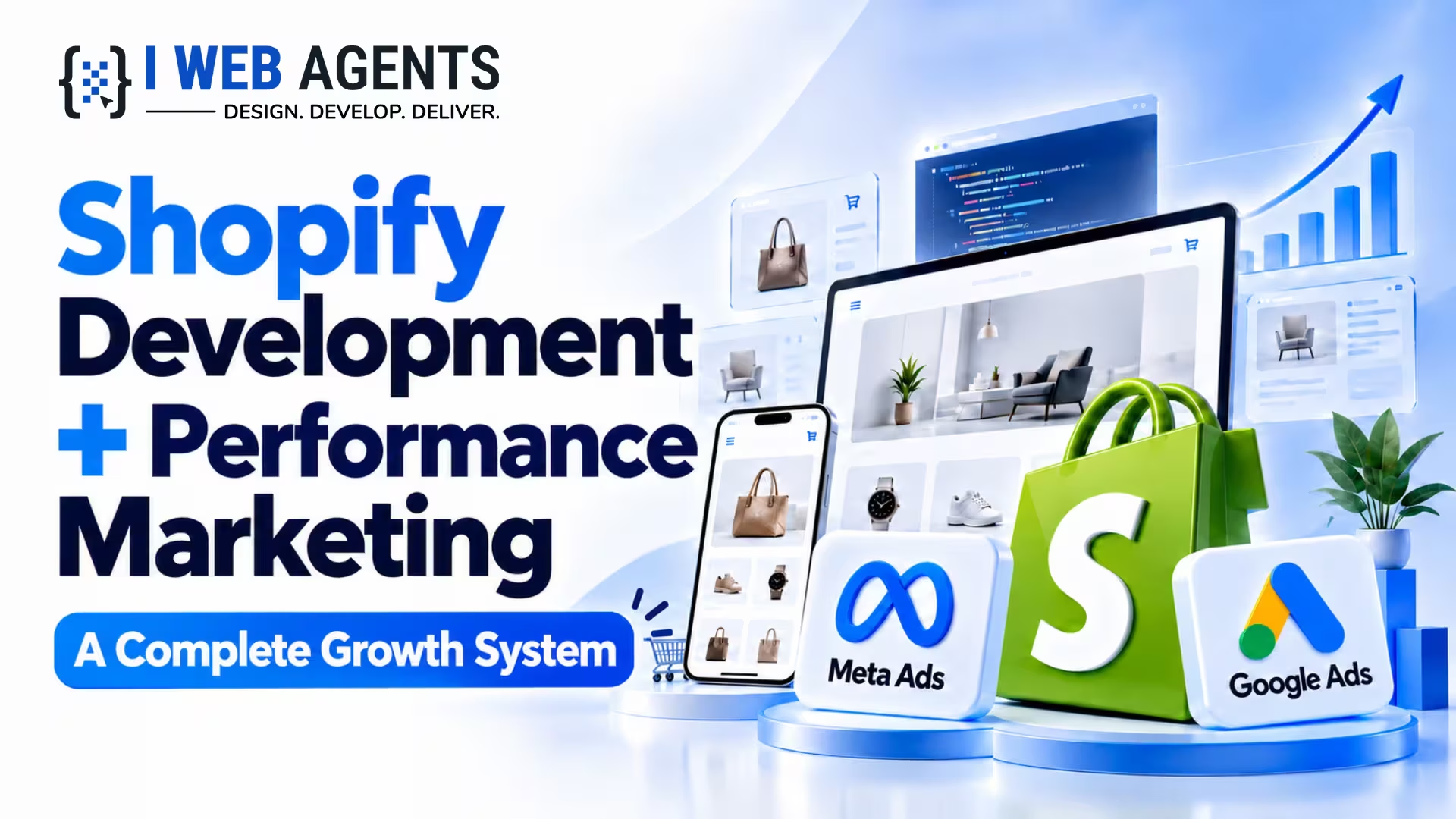
Most ecommerce brands treat website development and performance marketing as two separate purchases — a developer builds the store, and a marketing agency is hired afterward to drive traffic to it. This is where most Shopify stores fail to scale. Performance marketing is only as good as the store it's sending traffic to, and a store built without performance marketing in mind almost always underperforms once ad spend starts flowing in.
This guide explains how Shopify development and performance marketing actually connect, and why building them as one system produces measurably better results than treating them as separate projects.
What Performance Marketing Actually Means
Performance marketing is advertising where spend is directly tied to measurable results — sales, leads, or a specific action — rather than brand impressions alone. For ecommerce, this typically includes:
Meta Ads (Facebook and Instagram)
Google Ads (Search, Shopping, and Performance Max)
Retargeting campaigns across both platforms
Conversion-focused creative and landing pages
The defining feature of performance marketing is accountability. Every rupee spent should be traceable to a result, which means the store itself has to be built to capture and report that data accurately.
Why a Shopify Store Has to Be Built for Performance Marketing, Not Just Design
A store can look polished and still perform poorly in ad campaigns if the foundation isn't right. The most common gaps include:
Tracking set up incorrectly or incompletely If the Meta Pixel and Conversions API, or Google Analytics and Google Tag Manager, aren't installed and firing correctly, the ad platforms can't optimize toward real buyers. Campaigns end up spending money based on incomplete data.
Slow page load speed Performance marketing sends paid traffic to the store. If product and checkout pages load slowly, a large share of that paid traffic leaves before converting, and the cost per acquisition rises regardless of how good the ad targeting is.
Weak product pages Ads can bring a highly qualified visitor to a product page, but if that page lacks clear pricing, reviews, delivery information, and trust signals, the visitor leaves without buying. The ad did its job — the page didn't.
Complicated checkout flow Every extra step or unclear field in checkout increases drop-off. Performance marketing budgets are wasted recovering traffic that a simpler checkout would have converted the first time.
This is why development decisions — theme choice, app installations, checkout customization — need to be made with the marketing strategy in mind from the start, not adjusted after campaigns are already underperforming.
How iWebAgents Builds Shopify Stores and Performance Marketing as One System
Discovery and strategy — Understanding the product, target customer, and which channels (Meta, Google, or both) fit the buying behavior for that category
Shopify store build — Custom theme development, speed optimization, and a checkout flow designed to reduce drop-off
Tracking implementation — Meta Pixel, Conversions API, Google Analytics, and Google Tag Manager configured and tested before any ad spend begins
Campaign structure — Cold audience acquisition, warm retargeting, and post-purchase campaigns built around the actual customer journey
Landing page alignment — Product and collection pages built to match ad messaging, so the experience feels continuous from ad to purchase
Performance review cycle — Weekly analysis of cost per acquisition, conversion rate, and return on ad spend, with creative and budget adjustments based on real data
The Business Outcome of Building Both Together
When development and performance marketing are handled as one connected process:
Ad spend is measured accurately from day one, so decisions are based on real data, not guesswork
Store improvements (speed, page structure, checkout) are prioritized based on where campaigns are actually losing conversions
New campaigns can launch faster, since the tracking and page infrastructure already exist
Return on ad spend improves over time because the store and the marketing evolve together, rather than the store staying static while ad budgets increase
Pricing Considerations
Shopify development scope (new build versus redesign, product catalog size, custom features) and performance marketing scope (ad spend level, number of campaigns, platforms used) are priced separately, but should be planned together from the start. Businesses should be cautious of any agency quoting a marketing retainer without first reviewing whether the store's tracking and page structure are actually ready to support it — running ad spend on an unprepared store leads to wasted budget regardless of how well the campaigns are managed.
Frequently Asked Questions
Do I need a new Shopify store if I already have one and just want to start performance marketing? Not always. Existing stores can often be audited and optimized — tracking fixed, speed improved, checkout simplified — without a full rebuild, depending on the current setup.
Which performs better for a new Shopify brand: Meta Ads or Google Ads? It depends on the product category. Discovery-led categories (fashion, beauty, home, gifting) typically perform better on Meta initially, while high-intent categories with existing search demand often benefit more from Google Ads. Most brands eventually use both.
How is performance marketing different from just running ads? Performance marketing ties every campaign to measurable outcomes — cost per acquisition, return on ad spend, conversion rate — and uses that data to continuously optimize, rather than running static campaigns and hoping for results.
How soon can performance marketing start after a new Shopify store is built? Campaigns can typically begin as soon as the store is live and tracking is verified, often within the first week after launch.
Does iWebAgents manage performance marketing for stores it didn't build? Yes. iWebAgents can audit an existing Shopify store's tracking and structure before starting performance marketing, to make sure ad spend isn't wasted on avoidable gaps.
Why Choose iWebAgents
iWebAgents builds Shopify stores and manages the performance marketing that drives them, as one connected system rather than two separate services. Every store is built with tracking and conversion in mind from day one, so when performance marketing begins, the budget goes toward acquiring customers, not compensating for a store that wasn't ready.
Get in Touch
Send us a message and we'll get back to you.